
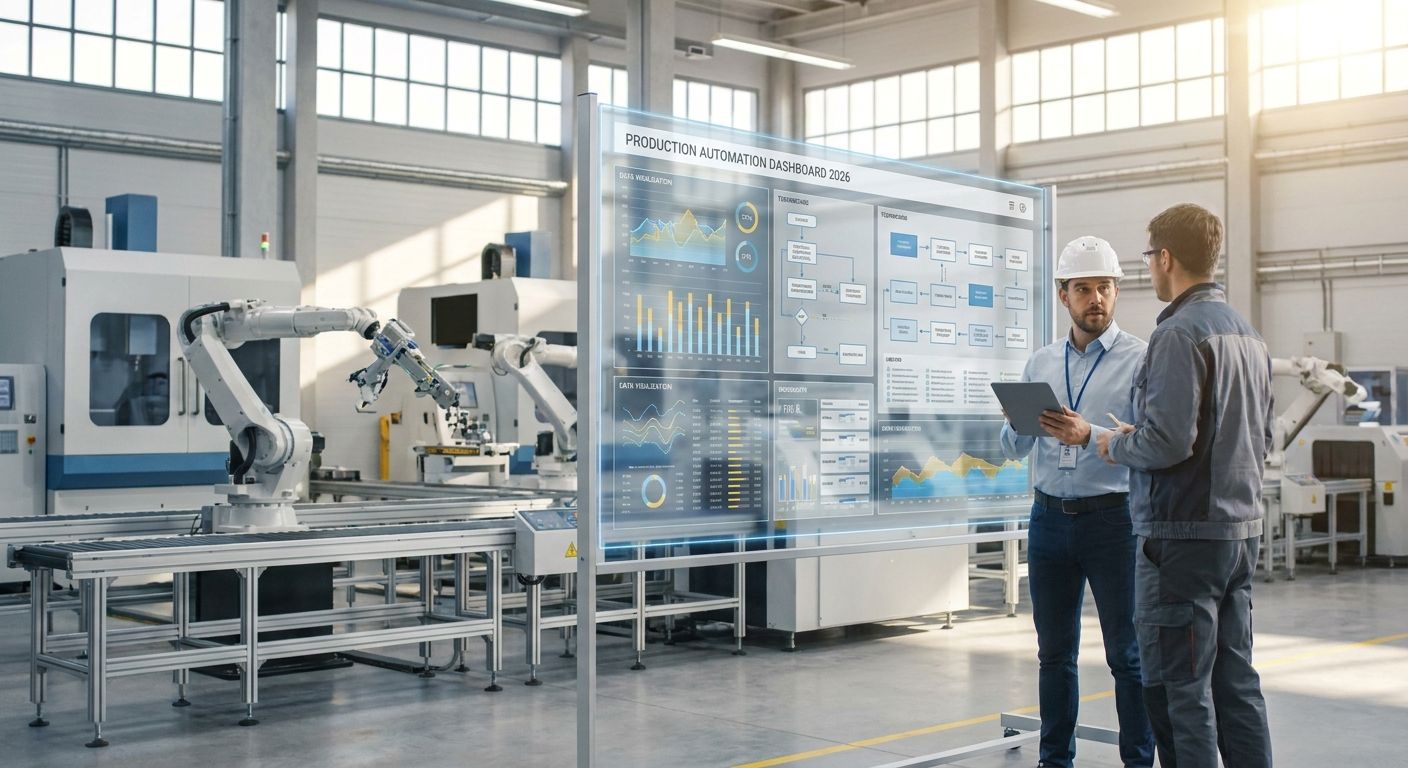
The best workflow automation tools for manufacturing plants in 2026 span robotic process automation (RPA) suites, BPMN orchestration engines, and no-code shop-floor app builders — and the wrong pick stalls a plant's automation roadmap for a year or more.
- UiPath is the best workflow automation tool for manufacturing plants running RPA across multiple facilities in 2026 — buy it for enterprise scale.
- Tulip Interfaces wins for frontline, shop-floor no-code apps built by supervisors instead of IT.
- n8n is the open-source pick for engineering-led plants that want to self-host and customize flows.
- Camunda fits complex, multi-system process orchestration where BPMN process maps matter.
- Audit MES and SCADA integration depth before signing any workflow automation contract in 2026.
Why this matters
Manufacturing plants run on a mix of legacy PLCs, MES software, ERP systems, and paper-based work instructions that were never designed to talk to each other. A workflow automation tool that can't bridge that gap adds another disconnected system instead of removing friction.
The category split matters more than any single feature list. RPA suites like UiPath automate repetitive data-entry between systems. Orchestration engines like Camunda manage long-running, multi-system processes. No-code builders like Tulip put workflow changes in the hands of shop-floor supervisors instead of IT tickets. Picking the wrong category is a more common failure than picking the wrong vendor within a category — a point covered in more depth on Fortiv Solutions' work architecting production AI and automation systems for manufacturers.
Before ranking tools, it helps to separate this question from a related one: which platforms actually understand AI for manufacturing software versus which ones are generic office automation repackaged for a factory use case.
What makes the best workflow automation tool for manufacturing plants
- MES/SCADA integration depth — native connectors to shop-floor systems, not just office apps
- No-code accessibility — can a line supervisor edit a workflow without an IT ticket
- Multi-plant scalability — centralized governance across more than one facility
- Process orchestration range — handles both quick single-task automation and long-running, multi-system processes
- Ecosystem fit — works with the ERP (SAP, Dynamics, Oracle) the plant already runs
- Security and audit trail — logging sufficient for regulated manufacturing environments
At a glance
| Tool | Best for | Standout feature | Key limitation |
|---|---|---|---|
| UiPath | Multi-plant RPA governance | Central orchestrator across bot fleets | Needs a dedicated RPA center of excellence |
| Tulip Interfaces | Shop-floor no-code apps | Built for frontline workers, not office RPA | Narrow scope outside plant-floor use cases |
| Camunda | Complex process orchestration | BPMN process maps engineers and business can both read | Requires process engineering expertise |
| n8n | Engineering-led, self-hosted automation | Open-source core, self-hosting, custom code nodes | Smaller enterprise support ecosystem |
| Microsoft Power Automate | Microsoft/Azure-standardized plants | Native Dynamics 365 and Teams integration | Weaker fit for non-Microsoft ERP/MES stacks |
| SAP Build Process Automation | SAP S/4HANA-native plants | Deepest native SAP ERP workflow integration | Locked to the SAP ecosystem |
1. UiPath: best workflow automation tool for multi-plant RPA governance
UiPath is an RPA platform with a central orchestrator, bot fleet management, and prebuilt connectors for common ERP and MES stacks, letting large manufacturers automate repetitive data-entry and back-office tasks across sites from one console.
UiPath pros:
- Central orchestrator gives visibility into every bot running across plants
- Mature connector library for SAP, Oracle, and common ERP/MES systems
- Governance and audit trail features suited to regulated manufacturers
UiPath cons:
- Needs dedicated RPA center-of-excellence staffing to run well
- Steeper learning curve for shop-floor supervisors than no-code tools
Best for: multi-plant manufacturers standardizing RPA governance across facilities. Verdict: Buy if you're running RPA across more than one facility in 2026.
2. Tulip Interfaces: best workflow automation tool for shop-floor apps
Tulip is a no-code platform built specifically for manufacturing frontline workers, letting supervisors build apps for work instructions, quality checks, and machine data capture without writing code.
Tulip Interfaces pros:
- Built for the plant floor, not adapted from office RPA
- No-code builder puts supervisors, not IT, in control of workflow changes
- Connects directly to machine sensors and IoT devices on the line
Tulip Interfaces cons:
- Narrower scope than general RPA suites — not built for finance workflows
- Requires machine and IoT connectivity investment to get full value
Best for: plants digitizing paper-based work instructions and quality checklists. Verdict: Buy for frontline digitization projects.
3. Camunda: best workflow automation tool for multi-system process orchestration
Camunda is a process orchestration engine built on the BPMN standard, designed to model and execute long-running workflows that span multiple systems — ERP, MES, and custom applications — with full process visibility.
Camunda pros:
- BPMN modeling gives process maps engineers and business teams can both read
- Handles long-running, multi-system processes better than simple task-bots
- Open architecture integrates with custom-built systems, not just prebuilt connectors
Camunda cons:
- Requires process engineering expertise to model correctly
- Slower to deploy for simple, single-task automations where RPA is faster
Best for: plants orchestrating processes that cross ERP, MES, and custom software. Verdict: Buy for orchestration-heavy environments.
4. n8n: best workflow automation tool for engineering-led, self-hosted plants
n8n is an open-source workflow automation tool that lets engineering teams build and self-host automation flows using a visual editor plus custom code nodes.
n8n pros:
- Self-hosting keeps plant data inside the plant's own infrastructure
- Open-source core keeps licensing costs predictable for cost-conscious sites
- Custom code nodes extend flows beyond prebuilt connectors
n8n cons:
- Needs in-house engineering capacity to maintain and secure the instance
- Smaller enterprise support ecosystem than UiPath or SAP
Best for: engineering teams that want full control over hosting and customization. Verdict: Consider if you have engineering bandwidth to own it in-house.
5. Microsoft Power Automate: best workflow automation tool for Microsoft-standardized plants
Power Automate is Microsoft's workflow automation tool, built to connect Office 365, Dynamics 365, and Azure services, with both cloud flows and desktop RPA flows.
Power Automate pros:
- Native integration with Microsoft 365, Teams, and Dynamics 365 ERP
- Licensing often already included inside existing Microsoft enterprise agreements
- Desktop flows handle legacy Windows-based plant applications RPA-style
Power Automate cons:
- Weaker fit for non-Microsoft ERP and MES environments
- Multi-step flows get unwieldy without governance discipline
Best for: plants already running Dynamics 365 or a Microsoft-centric IT stack. Verdict: Buy if Microsoft is already your ERP backbone.
6. SAP Build Process Automation: best workflow automation tool for SAP-native plants
SAP Build Process Automation combines process automation and RPA inside the SAP ecosystem, designed to extend and automate workflows that live in SAP S/4HANA and related modules.
SAP Build Process Automation pros:
- Deepest native integration with SAP ERP data and approval workflows
- Single vendor relationship for plants already running SAP end-to-end
- Built-in AI capabilities for document and decision automation inside SAP flows
SAP Build Process Automation cons:
- Locked to the SAP ecosystem — a poor fit if MES sits outside SAP
- Less flexible than open platforms for non-SAP custom integrations
Best for: SAP S/4HANA manufacturers extending ERP-native workflows. Verdict: Buy for SAP-only plants; Skip if your MES stack is non-SAP.
How we ranked these
Each tool was placed against the six criteria above, then assigned a distinct "best for" use case so the list reads as a decision tree, not a leaderboard — no two tools compete for the same slot. A plant running SAP end-to-end and a plant digitizing paper checklists on the shop floor need different tools, not a rank order of the same tool.
“If a workflow automation platform can't talk to your MES or SCADA system out of the box, it doesn't belong on a plant floor.”
Which workflow automation tool should you choose?
For most mid-market manufacturers running more than one facility, UiPath is the default pick in 2026 — the orchestrator and governance layer scale across sites. If the project is frontline-first (digitizing work instructions, quality checks, machine data capture), Tulip Interfaces wins outright. Engineering-led plants that want to own hosting and customization should default to n8n. SAP-native and Microsoft-native shops should stay inside their existing ERP ecosystem rather than bolting on a third platform.
Architect your plant's automation stack
Get an integration audit before committing to a platform.
FAQ
What is the best workflow automation tool for manufacturing plants in 2026?
UiPath is the best overall workflow automation tool for manufacturing plants running RPA across multiple facilities in 2026. Tulip Interfaces wins for shop-floor, no-code use cases, and n8n is the top open-source option.
Is UiPath better than Camunda for manufacturing workflows?
UiPath is better for repetitive, task-level automation across multiple plants, while Camunda is better for modeling and executing long-running processes that span ERP, MES, and custom systems. They solve different layers of the automation problem, not competing versions of the same one.
Can shop-floor supervisors build automation workflows without coding?
Yes — Tulip Interfaces is built specifically for no-code app creation by frontline supervisors, covering work instructions, quality checks, and machine data capture. Most RPA suites like UiPath still require dedicated technical staff to build and maintain flows.
Does workflow automation replace MES or SCADA systems?
No, workflow automation tools sit on top of or alongside MES and SCADA systems rather than replacing them. The best tools in 2026 connect to these systems through native connectors instead of duplicating their function.
What integration should a manufacturing plant check before buying a workflow automation tool?
Check MES and SCADA connector depth first, since that's the most common failure point in plant deployments. A tool with strong office-app integrations but weak plant-floor connectors will underperform regardless of its other features.
Is open-source workflow automation like n8n safe for manufacturing data?
n8n can be self-hosted, which keeps plant data inside the company's own infrastructure rather than a third-party cloud. That advantage only holds if the plant has in-house engineering capacity to secure and maintain the instance.
How long does it take to deploy workflow automation on a plant floor?
Deployment timelines vary by scope and system count rather than a fixed number, since integration complexity with legacy MES and PLC systems is the main driver. No-code tools like Tulip typically move faster than orchestration engines like Camunda for the same use case.
Do SAP-native manufacturers need a separate workflow automation tool?
Not necessarily — SAP Build Process Automation extends workflows natively inside S/4HANA and related modules. A separate tool becomes worth adding only when MES or shop-floor systems sit outside the SAP ecosystem.
One last thing
The most common reason a 2026 workflow automation rollout stalls on a plant floor isn't the software — it's MES and SCADA integration getting scoped as an afterthought instead of the first question in the evaluation. Plants that audit shop-floor system connectivity before picking a platform cut rework later; plants that pick the tool with the best demo skip that step and pay for it during implementation.