
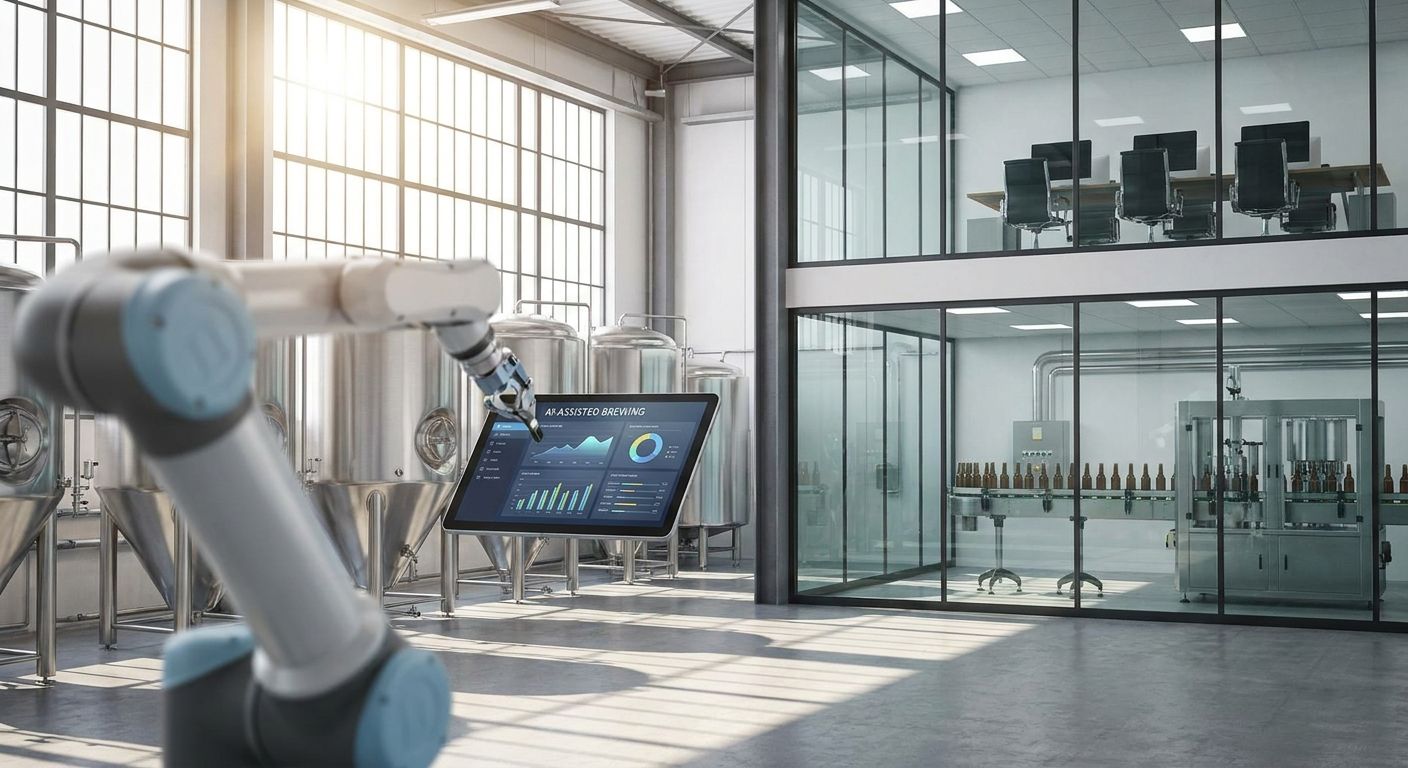
Beverage and brewing operations run on perishable inventory, multi-tier distribution, and food-safety audits — and in 2026, the AI agents that move the needle are the ones built for that specific mix, not generic chatbots repackaged for a new vertical. This guide ranks the six AI agent categories that deliver measurable ROI for beverage and brewing companies, what each one actually does, and where the deployment risk sits.
- Demand and inventory forecasting agents win the overall ranking for spoilage and seasonal SKU planning in 2026.
- Quality and compliance document intelligence agents rank best for batch traceability ahead of a regulatory audit.
- Distributor and retail voice ordering agents cut manual order-taking for field sales teams.
- Predictive maintenance agents protect uptime on bottling and canning lines but need sensor data first.
- Fortiv Solutions builds and integrates all six agent types into existing SAP, Salesforce, and TallyPrime stacks.
Why this matters
Beverage and brewing companies run tighter margins than most consumer goods categories: spoilage, seasonal demand swings, multi-state distribution, and food-safety audits compound faster than they do in dry goods. A generic workflow tool bolted onto SAP or Salesforce doesn't solve batch-level traceability or route-level distributor ordering — it just relocates the manual work.
Fortiv Solutions designs, builds, and integrates production-ready AI agents for mid-market and enterprise manufacturers, and beverage and brewing operations show up in that build queue often enough to warrant a category-specific ranking. The six agent types below are ordered by deployment priority in 2026 — how fast each one pays back, not how impressive the demo looks.
Best overall: demand and inventory forecasting agents. Best for compliance-heavy operations: quality and compliance document intelligence agents. Best for field sales: distributor and retail voice ordering agents.
What makes the best AI agents for beverage and brewing companies in 2026
- ERP and CRM integration — connects to SAP, Salesforce, or TallyPrime without a rip-and-replace project
- Production-ready data pipelines — pulls from POS, distributor, and production-line data without months of cleanup
- Audit and traceability support — logs decisions in a format regulators and internal QA teams can review
- Human-in-the-loop escalation — routes exceptions like a spoiled batch or a price override to a person instead of auto-resolving
- Multi-plant and multi-SKU scalability — works across regions and packaging formats, not just one bottling line
- Measurable payback window — ties to a specific KPI: spoilage rate, order cycle time, or downtime hours
AI agents for beverage and brewing companies at a glance
| Agent type | Best for | Standout capability | Key limitation |
|---|---|---|---|
| Demand & inventory forecasting agents | Seasonal SKU and inventory planning | Cuts stockouts and overproduction with SKU-level forecasts | Needs 12-18 months of clean sales history to forecast reliably |
| Distributor & retail voice ordering agents | Field sales and route-to-market ordering | Takes phone or WhatsApp orders without manual re-entry | Struggles with ad-hoc negotiated pricing without escalation rules |
| Quality & compliance document intelligence agents | Batch traceability and regulatory audits | Extracts and cross-checks batch, lot, and QA data automatically | Needs structured or semi-structured source documents |
| Predictive maintenance agents | Bottling and canning line uptime | Flags equipment drift before a line stoppage | Requires sensor or IoT data most legacy lines don't have |
| Trade promotion & pricing optimization agents | Revenue growth management | Models promotion lift against margin in near real time | Needs finance sign-off workflows designed in, not bolted on |
| Consumer service voice AI agents | D2C and call center deflection | Handles order status and FAQ volume without hold queues | Needs a fast escalation path for quality-related complaints |
1. Demand and inventory forecasting agents: best AI agent for seasonal SKU and inventory planning
Demand and inventory forecasting agents pull historical sales, weather, and promotional data to predict SKU-level demand weeks or months ahead. For beverage and brewing companies, that means fewer stockouts during a summer demand spike and less spoiled inventory sitting past shelf life in a warehouse. The agent updates forecasts continuously instead of running a static monthly report.
Demand and inventory forecasting agents pros:
- Cuts manual spreadsheet forecasting time for planning teams
- Adjusts automatically when a promotion or weather event shifts demand
- Flags slow-moving SKUs before they age out
Demand and inventory forecasting agents cons:
- Accuracy depends on at least a year of clean historical sales data
- Underperforms for brand-new SKU launches with no sales history
Best for: multi-SKU beverage brands managing seasonal demand swings. Verdict: Build now.
2. Distributor and retail voice ordering agents: best AI agent for field sales and route-to-market ordering
Distributor and retail voice ordering agents take orders by phone or WhatsApp, match them against a live pricing and inventory feed, and push confirmed orders straight into the ERP without a rep re-keying anything. For brewing and beverage companies running a multi-tier distributor network across several states, that shrinks the order-to-invoice cycle and frees reps to sell instead of type.
Distributor and retail voice ordering agents pros:
- Takes orders over phone or WhatsApp without manual re-entry
- Shortens the order-to-invoice cycle time
- Frees field reps for relationship-building instead of data entry
Distributor and retail voice ordering agents cons:
- Needs clear escalation rules for negotiated pricing or credit holds
- Requires clean SKU and pricing master data to avoid order errors
Best for: brewing and beverage companies with multi-tier distributor networks. Verdict: Build now.
3. Quality and compliance document intelligence agents: best AI agent for batch traceability and regulatory audits
Quality and compliance document intelligence agents read batch records, lab results, and QA sign-offs, then cross-check them against specification limits automatically. For breweries and bottling plants working toward audit readiness in 2026, that turns a multi-day manual batch review into a same-day check with a documented decision trail. Fortiv Solutions builds this class of document intelligence software for regulated industries beyond legal, and the same extraction and cross-check logic applies directly to food and beverage QA documents.
Quality and compliance document intelligence agents pros:
- Cuts manual batch review time before an audit
- Creates a searchable, timestamped record for QA sign-off
- Flags spec deviations before they reach a customer complaint
Quality and compliance document intelligence agents cons:
- Needs structured or semi-structured source documents for high extraction accuracy
- Doesn't replace a human QA sign-off on flagged exceptions
Best for: breweries and bottlers facing FSSAI, FDA, or ISO audit pressure. Verdict: Build now.
“If an AI agent can't explain why it flagged a batch, it isn't audit-ready.”
4. Predictive maintenance agents: best AI agent for bottling and canning line uptime
Predictive maintenance agents ingest sensor and machine-log data from bottling, canning, or brewing lines to flag equipment drift before it causes an unplanned stoppage. Fortiv Solutions applies the same predictive analytics tools for manufacturing architecture built for discrete manufacturing plants to continuous-process beverage lines, where downtime mid-batch costs more than downtime between runs.
Predictive maintenance agents pros:
- Reduces unplanned downtime on high-throughput lines
- Extends the interval between scheduled maintenance windows
- Prioritizes maintenance spend by failure risk instead of a fixed calendar
Predictive maintenance agents cons:
- Needs IoT or sensor data feeding the model; many legacy lines aren't instrumented
- Takes several months of baseline data before predictions stabilize
Best for: high-volume bottling and canning operations running near capacity. Verdict: Pilot first.
5. Trade promotion and pricing optimization agents: best AI agent for revenue growth management
Trade promotion and pricing optimization agents model how a discount, bundle, or seasonal promotion affects volume and margin before it goes live, then track actual lift against that model afterward. For beverage brands running frequent retail and distributor promotions, that closes the loop between trade spend and revenue growth management instead of waiting for a quarterly retrospective.
Trade promotion and pricing optimization agents pros:
- Models promotion lift against margin before committing spend
- Tracks actual results against forecast for future promotion planning
- Surfaces which distributor or region overspends relative to lift
Trade promotion and pricing optimization agents cons:
- Needs finance and trade marketing sign-off workflows designed in from the start
- Less useful for brands running only one or two promotions a year
Best for: beverage brands running frequent trade promotions across multiple retail channels. Verdict: Phase 2.
6. Consumer service voice AI agents: best AI agent for D2C and call center deflection
Consumer service voice AI agents handle order status, subscription changes, and FAQ volume for beverage brands selling direct-to-consumer, freeing human agents for complaints tied to product quality or safety. Fortiv Solutions builds this on the same enterprise AI agent development framework used across banking and healthcare, adapted for beverage-specific order and subscription workflows.
Consumer service voice AI agents pros:
- Deflects routine order-status and FAQ volume from human agents
- Runs on voice or chat depending on channel preference
- Scales during seasonal volume spikes without added headcount
Consumer service voice AI agents cons:
- Needs a fast, clear escalation path for quality or safety complaints
- Requires ongoing tuning as new SKUs and promotions launch
Best for: D2C beverage brands with seasonal support volume spikes. Verdict: Pilot first.
How we ranked
The order above follows deployment priority, not novelty: agents that touch spoilage and inventory risk rank ahead of agents that touch discretionary revenue growth, because the payback window is shorter and the data requirements are simpler. Every agent type is scored against the same six criteria — ERP integration, data readiness, audit support, human escalation, scalability, and a measurable payback window. Agents 1 through 3 sit above agents 4 through 6 because their cons involve less upstream data work.
Which AI agent should a beverage or brewing company build first in 2026?
Start with demand and inventory forecasting agents if spoilage or stockouts are the immediate pain point — they carry the clearest ROI path and the shortest data runway. Move to quality and compliance document intelligence agents next if an audit sits on the 2026 calendar, since batch traceability failures carry regulatory risk that inventory misses don't. Distributor voice ordering agents come third for companies running lean field sales teams across multiple states or regions.
Predictive maintenance, trade promotion optimization, and consumer service voice agents belong in a second wave, once the first three are live and generating clean data those later agents can draw on.
Scope your first AI agent build
Get an architecture review for beverage and brewing operations in 2026.
FAQ
What is the best AI agent for beverage and brewing companies in 2026?
Demand and inventory forecasting agents are the best starting point for most beverage and brewing companies in 2026, since spoilage and seasonal demand swings create the fastest payback. Quality and compliance document intelligence agents rank close behind for companies facing a near-term audit.
How much does it cost to build an AI agent for a beverage company?
Cost depends on data readiness, existing ERP integration, and how many plants or SKUs sit in scope, so there isn't one flat number. A scoped architecture review against your current SAP, Salesforce, or TallyPrime setup gives an accurate figure.
Is a voice ordering agent better than a chatbot for distributor sales?
A voice ordering agent works better for field sales because most distributor orders still come in by phone or WhatsApp rather than a web form. A text-only chatbot misses that channel entirely.
How long does it take to deploy an AI agent for a bottling or canning line?
Predictive maintenance agents typically need several months of baseline sensor data before predictions stabilize, longer than a demand forecasting agent that can run against existing sales history immediately. Timeline depends heavily on whether the line already has IoT sensors installed.
Do AI agents replace QA staff in a brewery?
No. Quality and compliance document intelligence agents flag spec deviations and speed up batch review, but a human QA lead still signs off on flagged exceptions. The agent removes manual document review time, not accountability.
What data does a demand forecasting agent need to work?
A demand and inventory forecasting agent needs at least 12-18 months of clean historical sales data to forecast SKU-level demand reliably. It underperforms for brand-new SKUs with no sales history yet.
Can AI agents integrate with SAP or Salesforce for beverage companies?
Yes. Production-ready AI agents for beverage and brewing companies connect to existing SAP, Salesforce, or TallyPrime instances rather than requiring a separate system, which is one of the six ranking criteria in this guide.
What's the difference between predictive maintenance and generic IoT monitoring?
Generic IoT monitoring reports current sensor readings; a predictive maintenance agent models failure risk from that data and flags drift before a stoppage happens. Monitoring tells you what's happening now, the agent tells you what's about to happen.
One last thing
The beverage and brewing companies getting the fastest ROI in 2026 don't start with the flashiest agent — they start with the one wired into ERP data that already sits in SAP or TallyPrime, because that's the build requiring the least new data plumbing. Fortiv Solutions scopes every AI agent build against existing data readiness first, before proposing anything new.